Your support keeps our blog going ♥ We may earn a small commission if you shop via our affiliate links. Learn more here.
Dad’s cooking curry in the kitchen. The kids are building Lego at the dining table. Meanwhile, Mum’s binge-watching reality TV after a long day (she deserves it!)
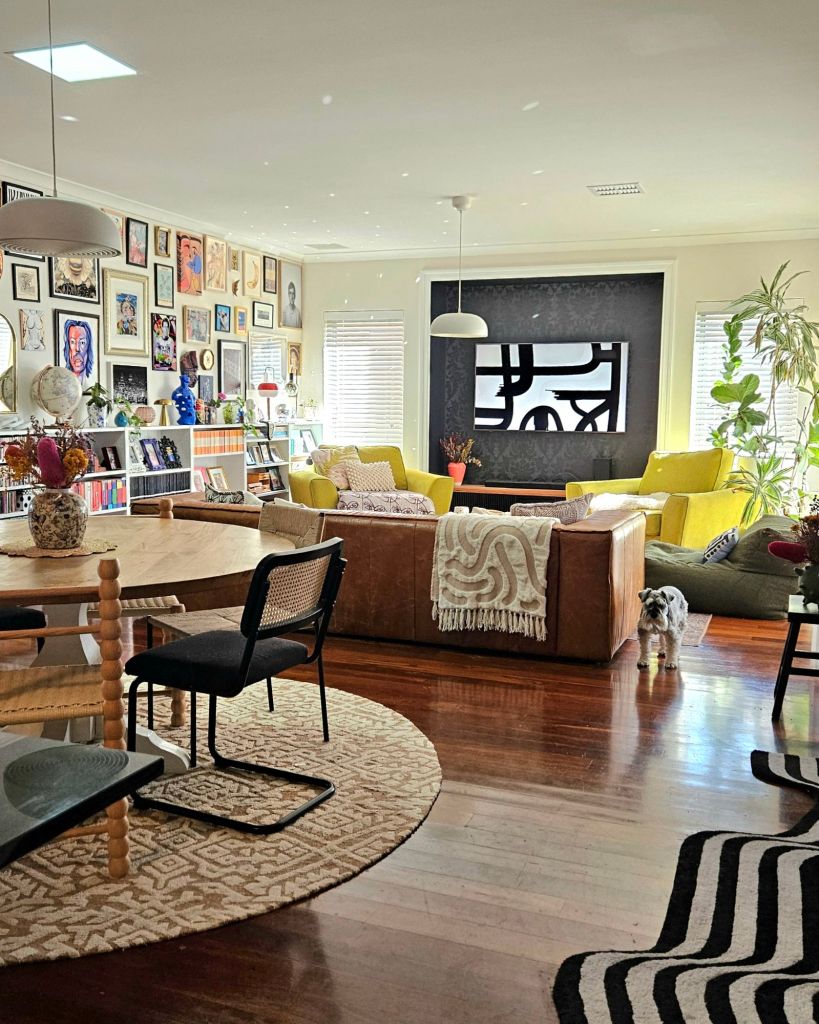
In an open concept space, everyone can still interact while doing do their own thing… all alone, but still all together 💞
Open-plan living spaces aren’t just great for families and social interaction. The lack of walls between your living, dining and kitchen gives you the illusion of more space, while increasing the flow of natural light and giving you much more freedom with how you arrange things.
If you’re working with an open-plan layout, here are 5 tips for making the most of it 👇
Create zones with rugs and lighting

In a multi-purpose open-plan space, you still want to visually indicate where you lounge, where you dine and where you cook.
Rugs and lighting are great way to delineate your space and create ‘zones’ 💫
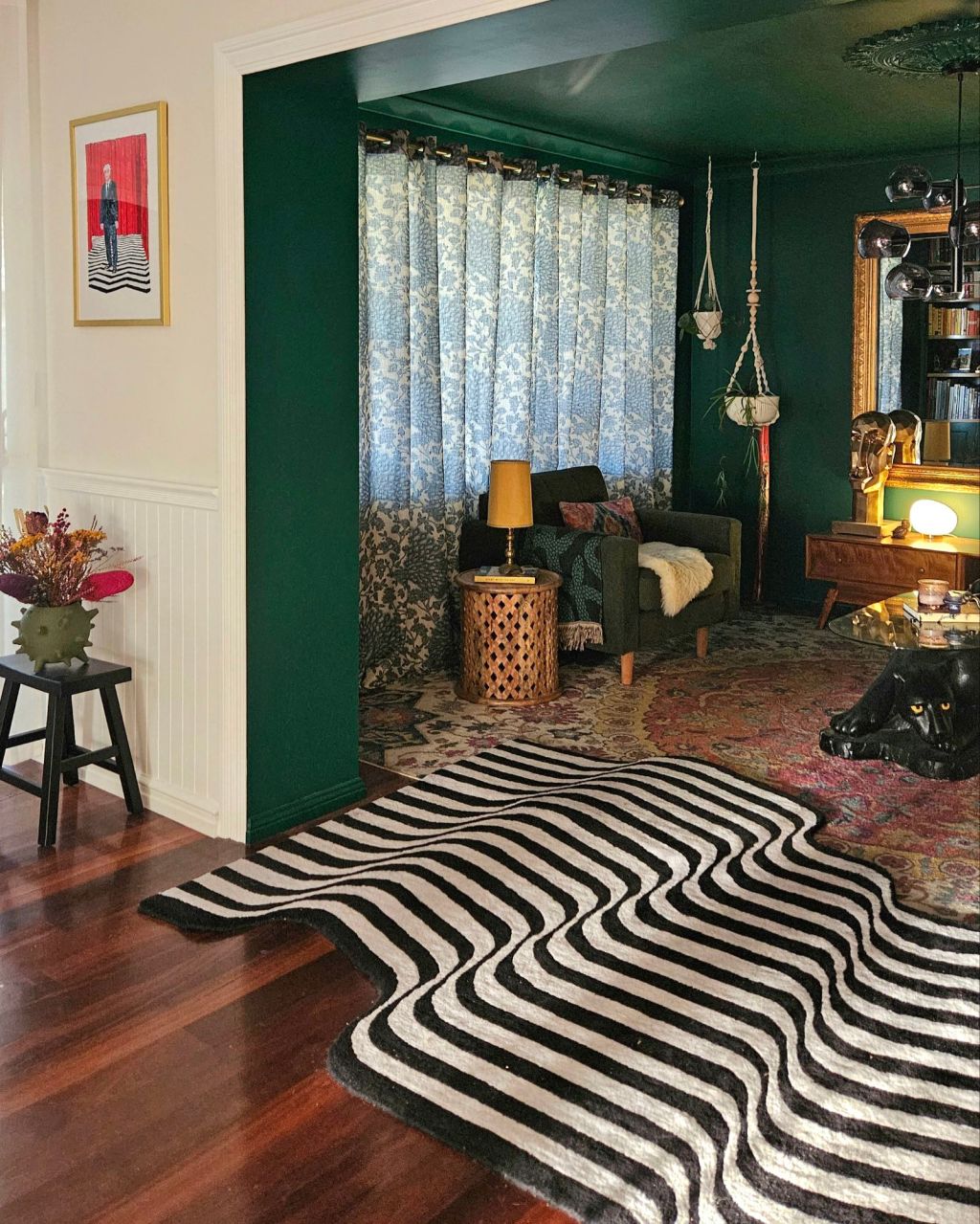
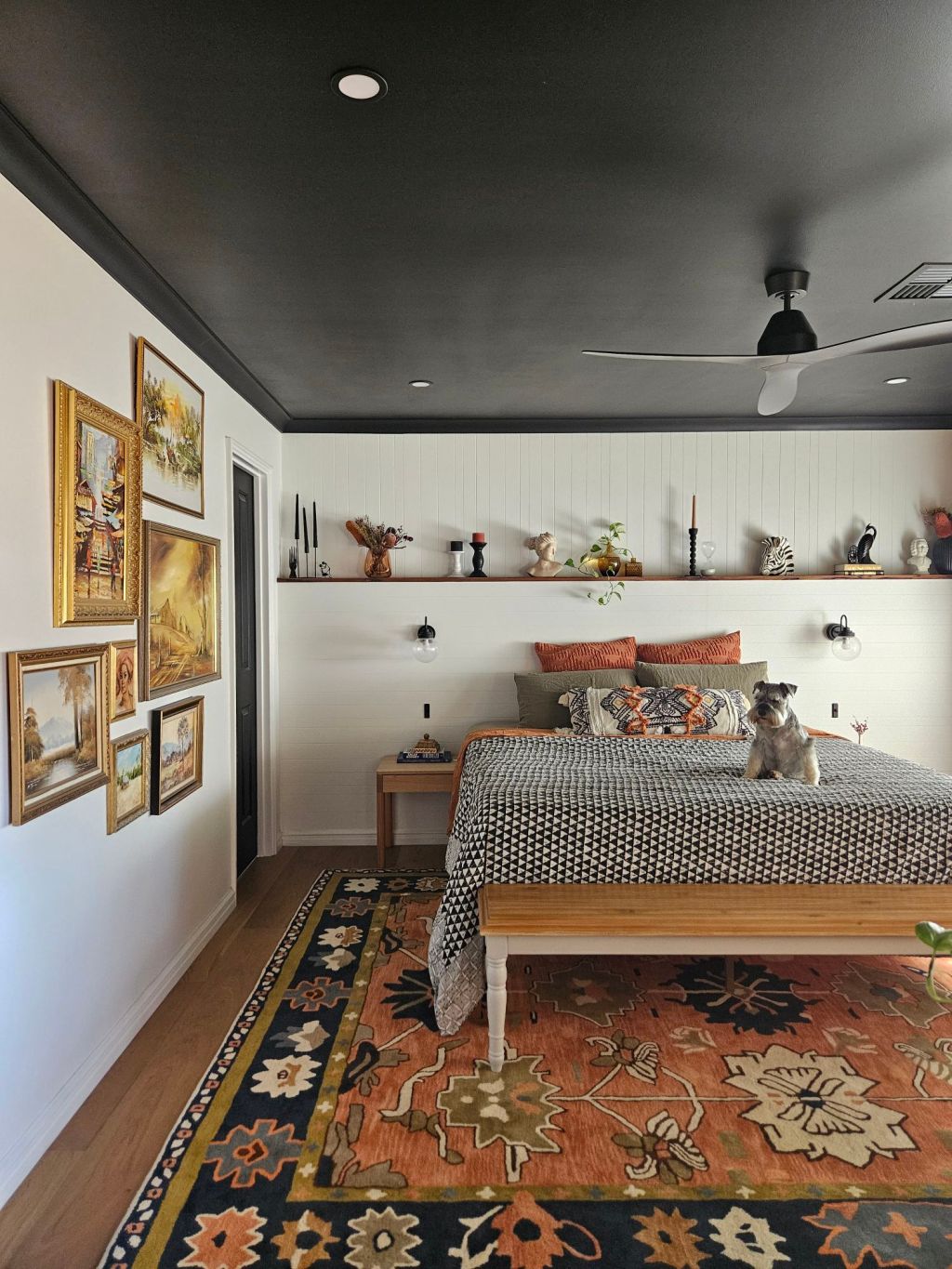
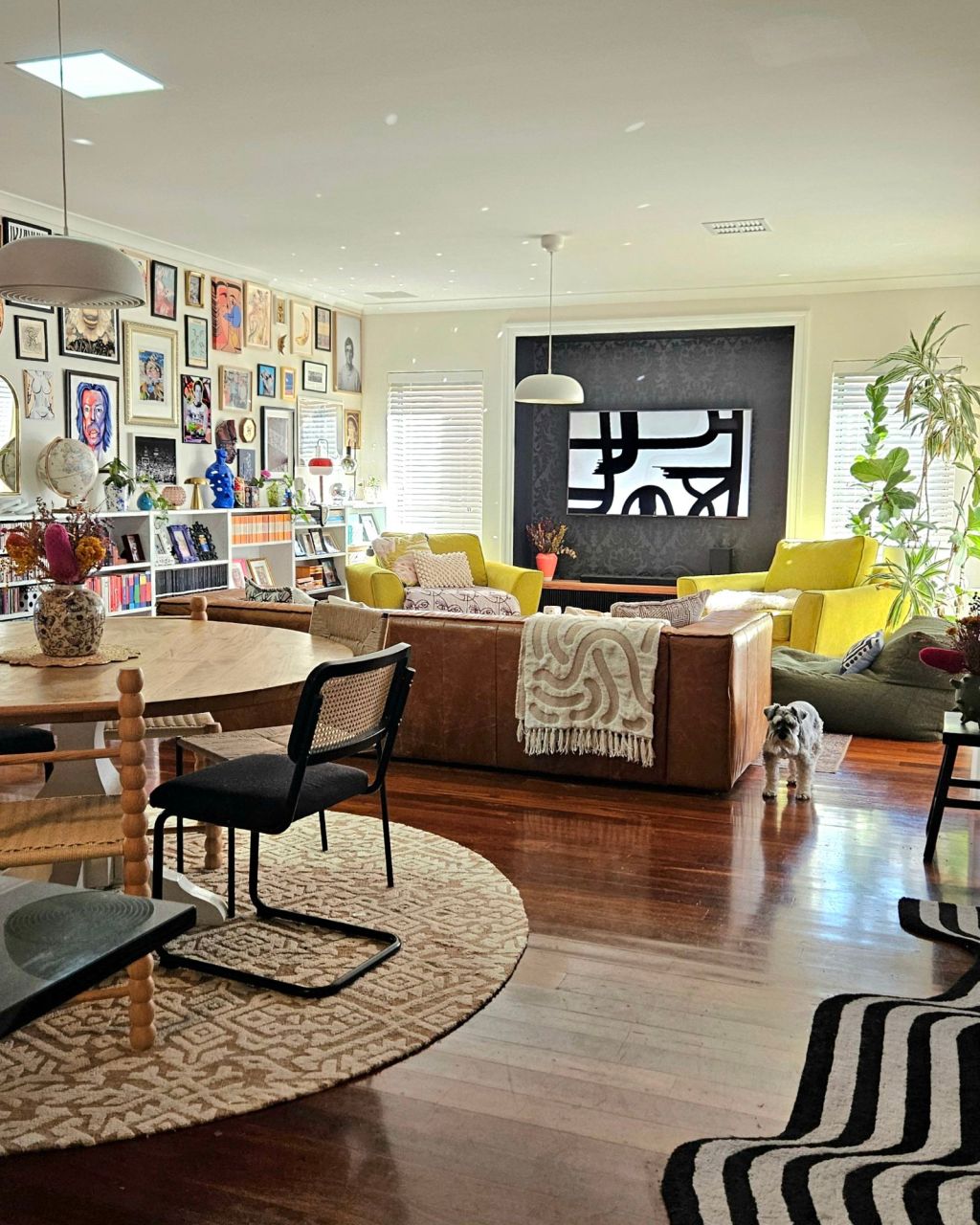
In your living space, a rug grounds your furniture while adding art to your floor. Just make sure it’s big enough to tuck under your furniture – a rug that’s too small and doesn’t tuck under the front feet of your sofa and armchairs will look like it’s floating in no-man’s land and actually make the space feel smaller.
Hanging a pendant above your coffee table can also help zone the space, drawing your eye to the centre of your lounging zone and creating radial balance.
Similarly, a rug under your dining table and a pendant above it will help zone your dining space. Just make sure the rug is big enough for your chairs even when they’re pulled out.
👀 READ: 6 reasons why rugs make the room
Maximise natural light

Open concept spaces are so popular in modern homes because they feel open, airy, light and bright 🌞
If you’re planning a new build, make sure your windows are strategically placed to maximise natural light. If you’re in the southern hemisphere, you want north-facing windows… and if you’re in the north, you want south. Luckily, most Australian architects design homes with north-facing windows in the living space so they’re flooded with natural light earlier in the day.
But don’t assume one window will do the job. Consider wall to wall sliding doors to connect the outside with the inside, smaller windows on east and west walls, and a window near your kitchen to keep the light flowing throughout.
When choosing curtains, try not to block out too much sunlight in your living space – that’ll just defeat the purpose of going open-plan. Blinds paired with sheer or light filtering curtains will still give you privacy and allow you to control how much light comes in without completely blocking it out.
You can also use mirrors opposite your windows to help bounce light around the space and make the space feel even bigger. And don’t underestimate the power of a disco ball! 🪩
👀 READ: 9 living room design tips
Keep the space open with a low sofa
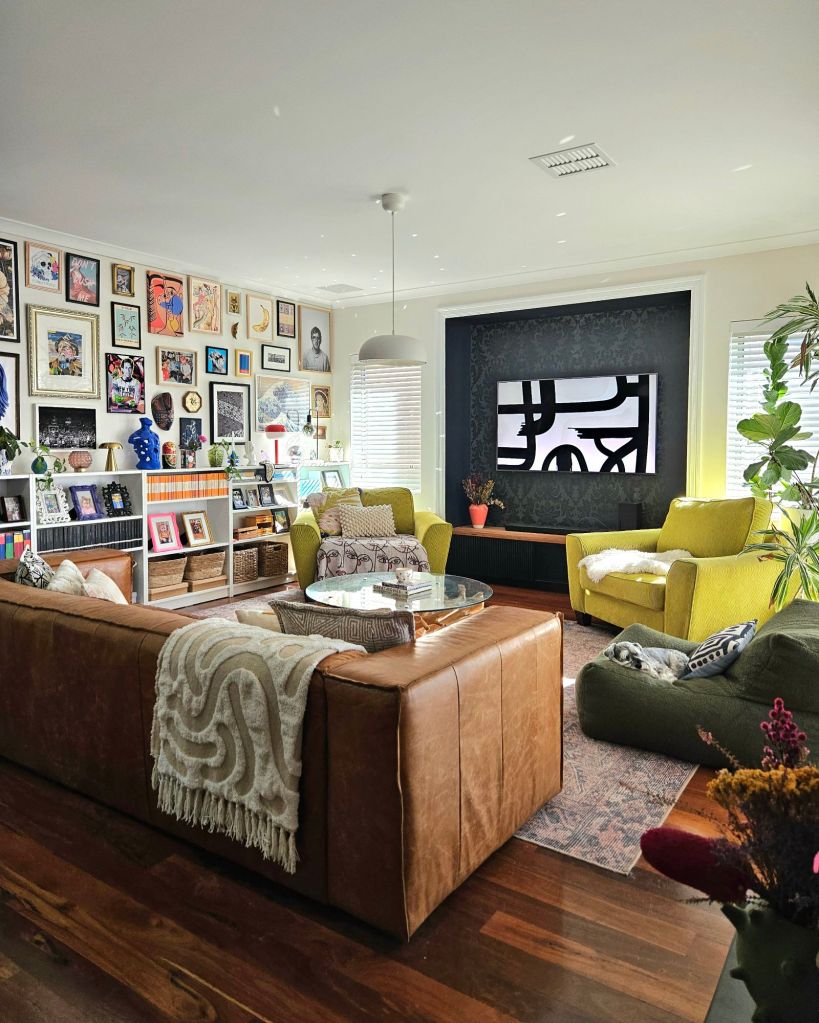
In an open-plan living area, you should have enough space to float your sofa near the centre of the room and not have it up against a wall.
The back of your sofa will essentially create an invisible barrier that separates the living zone from the dining zone or kitchen.
In an open-plan space, it’s best to choose a sofa with a low or flat back. This will keep the space from feeling closed off, ensuring you can still turn around comfortably and have a conversation with someone while sitting on the sofa.
A sofa with a high back will feel like you’ve added a ‘wall’, cutting off the space and just looking a little awkward 😬
Repeat elements between zones

Since open-plan spaces often share the same ceiling, the entire space is read as one. So it’s a good idea to have some consistencies throughout each zone so it doesn’t feel like a major mish-mash.
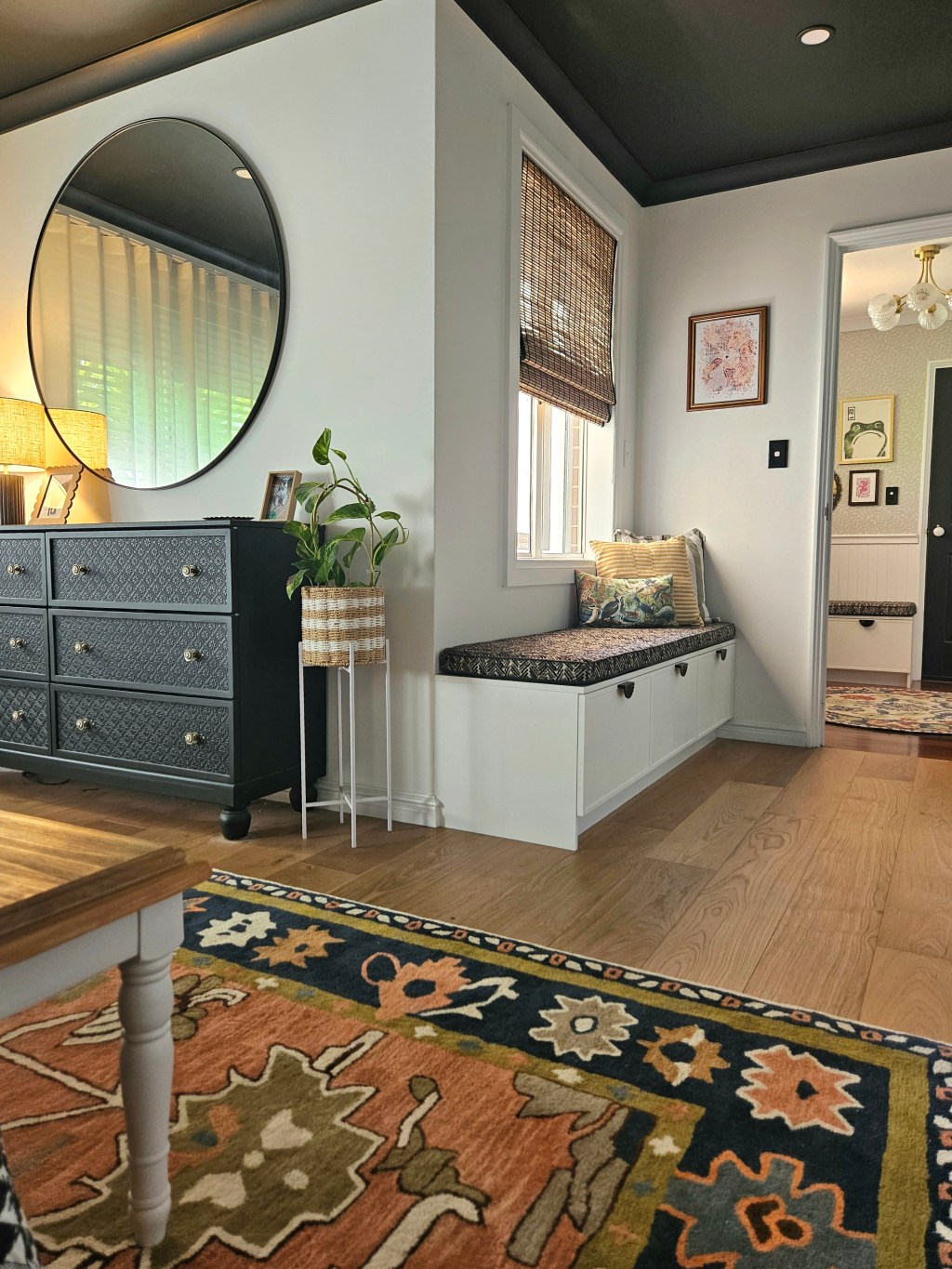
Having the same flooring throughout the area – be it timber, laminate or tile – will help maintain that feeling of flow.
Similarly, lots of different light fixtures will start to look messy. If you’re hanging pendants above your dining table and coffee table to zone those areas, use the same style pendant to tie the two spaces together and keep them from competing against eachother.
A consistent colour palette is the easiest way to create harmony between spaces 🤍 You can still incorporate lots of colour if that’s what you like – just try to repeat them, even in small doses, throughout each zone so it all works together.
👀 READ: 6 do’s and don’ts of decorating
Use walls for storage

With your seating furniture positioned toward the centre of the space, your walls are free for art, mirrors, plants, lamps, and storage.
👀 READ: 10 things you need for a thoughtfully designed space
Line your walls with bookshelves, buffets and other vertical storage solutions to keep unintentional clutter at bay.
Built-in cabinetry always looks classy, but there are plenty off-the-rack storage ideas to maximise your wall space.
In our dining room, we have a big blue hutch that takes up a small wall, giving us plenty of storage for wine glasses, kitchenware and booze 🍷
In our living room, we’ve lined our biggest wall with seven Billy bookcases from IKEA. We’ve decorated them with books, picture frames and colourful decor, and the bottom shelves are reserved for baskets filled with whatever toys, blankets and miscellaneous crap we need to hide in a hurry.
👉 Follow @mismatchedhome on Insta for more from our home and make sure you subscribe for new articles straight to your inbox.


 mismatchedhome.blog
Leave a comment