Your support keeps our blog going ♥ We may earn a small commission if you shop via our affiliate links. Learn more here.
Everyone’s different. We all have different tastes, different vibes and different swag. That’s what makes the world interesting!
Imagine if everyone’s house looked the same. For a while there, they kinda did! But in 2024, individuality is coming back into fashion and I’m here for it!
When it comes to interior design, my personal aesthetic is definitely eclectic; I lean more traditional than modern, I love colour but like to work with a neutral base, and I enjoy adding a little bit of conflict and juxtaposition to every room I design.
My design decisions are impacted by the purpose of a space and what the intended feeling is; but I do also have some personal interior design preferences that tend to appear time and time again, whether I’m designing for my family or a client.
These are just my personal preferences — they’re not gospel. Many interior designers and homeowners won’t agree with my choices — and that’s OK! You’ve gotta be YOU in your own home… otherwise, what’s the point?
So with that said, here are 12 of my go-to interior design preferences and the thought process behind them.
1. Contrasting Shapes
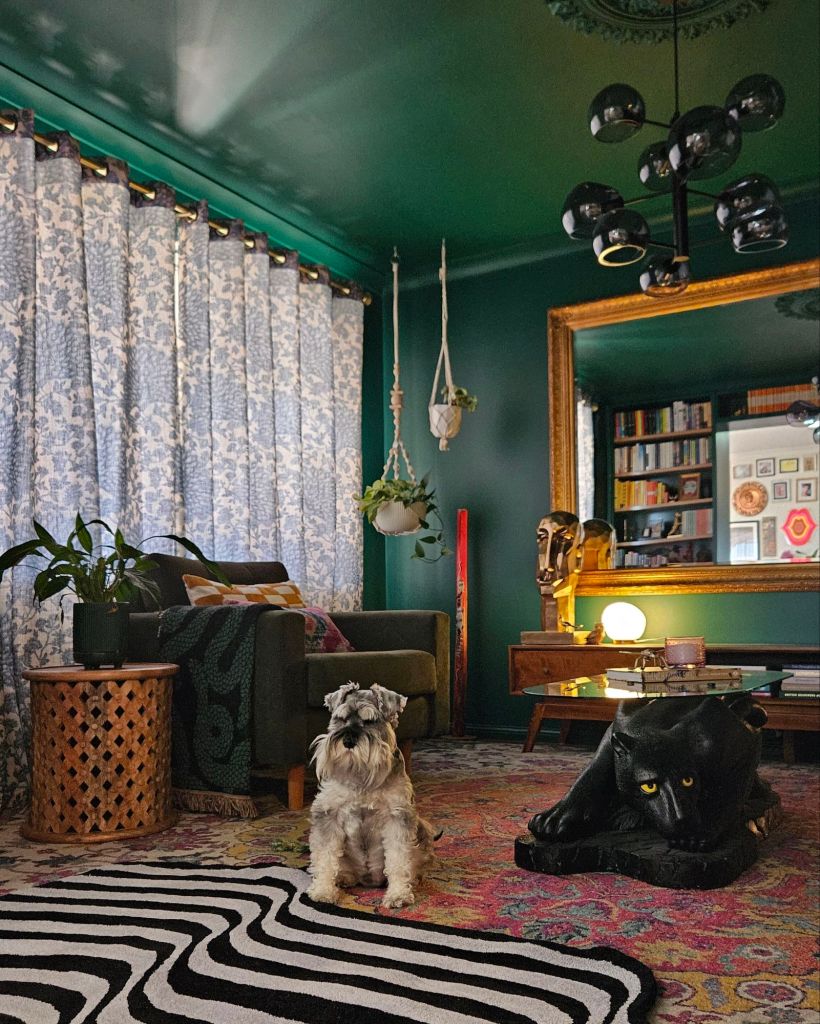
The biggest hallmark of eclectic interior design (my preferred design style) is its considered use of furniture and decor from different eras.
Often what tells us what design style or era a particular piece is from is its shape.
Sofas with rolled arms tend to skew more traditional. Sofas with clean lines tend to skew mid-century modern or contemporary.
Personally, if I have a very traditional style sofa (like a chesterfield) the eclectic designer in me wouldn’t want to pair that with furniture from the same era. I don’t want a room to feel one-note.
If something is square and linear, my natural instinct is to pair it with something round to balance it out.
Unless I’ve made a concious decision to hit a particular design style in a room, I’m always going to choose contrasting shapes.
🎬 WATCH: Eclectic interior design tips
Neutral Cushions

The word ‘neutral’ has a few meanings.
It can refer to being impartial; not aligning oneself with a particular idea.
It can refer to lacking any strong characteristics.
It can also refer to colour; your whites, beiges and blacks.
All of these are good reason enough to me to choose ‘neutral’ cushions.
Call me lazy, but neutral cushions always work.
Especially when the walls are white (or off-white), I will almost always exclusively choose neutral cushions. But they will almost always still have pattern, texture and be in a range of neutrals with some contrast (think black and white or beige and white).
Contrast is always key for me, and I really love the contrast of neutral cushions on a leather or coloured fabric sofa. It always works.
In a colour drenched room with a tight colour palette, I might not go with neutral cushions… but if I did, they would still work.
Why? Because they’re neutral.
Black Fixtures

When choosing fixtures like taps, cabinet hardware, pendant lights and even light switches, personally, I like to go with black.
My preference for black doesn’t always win (I also enjoy aged brass) but a lot of the time I just can’t help myself.
The reason, again, is contrast.
Especially when cabinetry is white, the contrast of black fixtures is super satisfying to me.
The repitition of black in small doses (like in our laundry above) also helps create harmony in the space.
Imagine replacing the black in that image with chrome or brass. The vibe would change and the contrast wouldn’t be as strong.
And high contrast for me is key.
Built-In Cabinetry
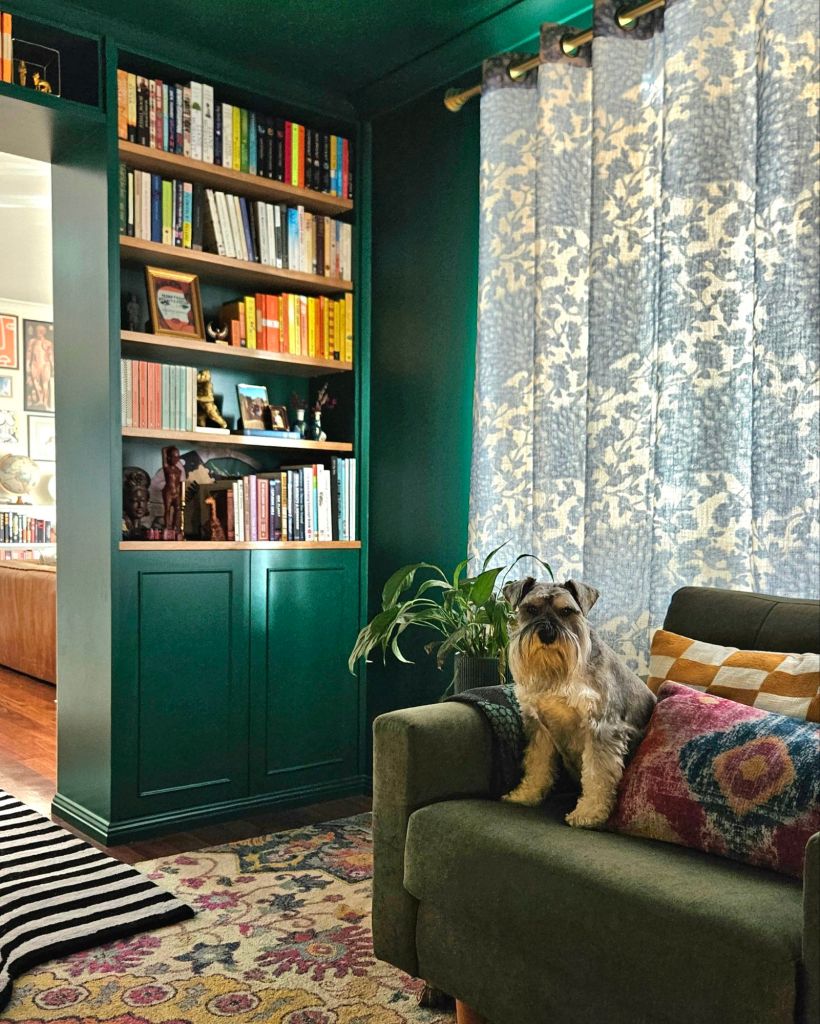
If it makes sense in a space and the budget allows, I will always try to incorporate built-in cabinetry.
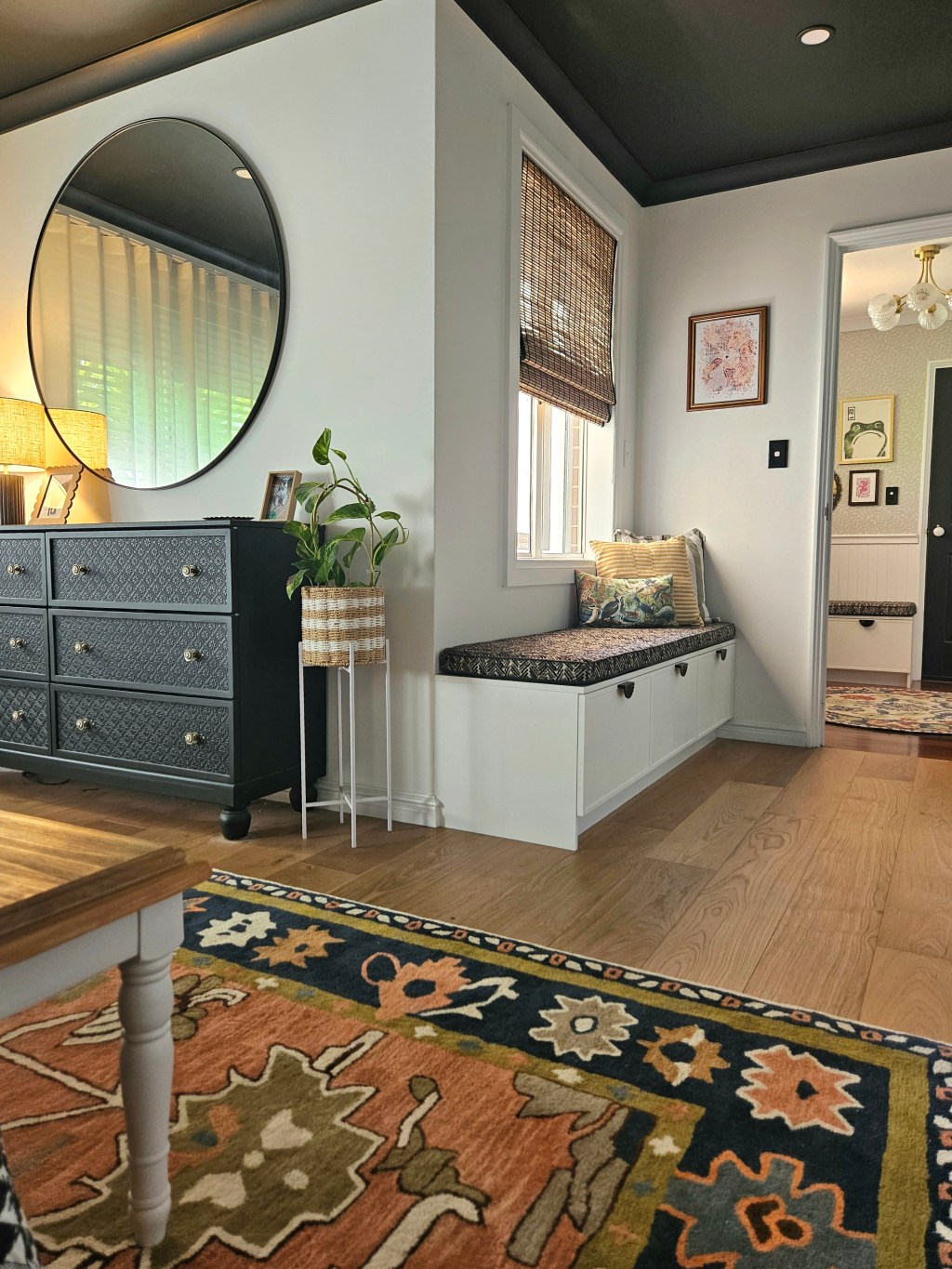
Not only does built-in cabinetry give you more storage, it also gives you an opportunity to add character and introduce colour and texture through paint, decorative mouldings and hardware.
Built-in cabinetry always looks more finessed than trying to fit something off the shelf into an awkward space, like we’ve done in our library.
Of course, custom cabinetry can be expensive, but if you or your other half is handy, why not give it a go yourself?
Our small business 6PM Interiors offers both interior design and custom cabinetry services for clients in Perth, Australia, so get in touch if you need someone to design or build your next built-in.
Colour Pops
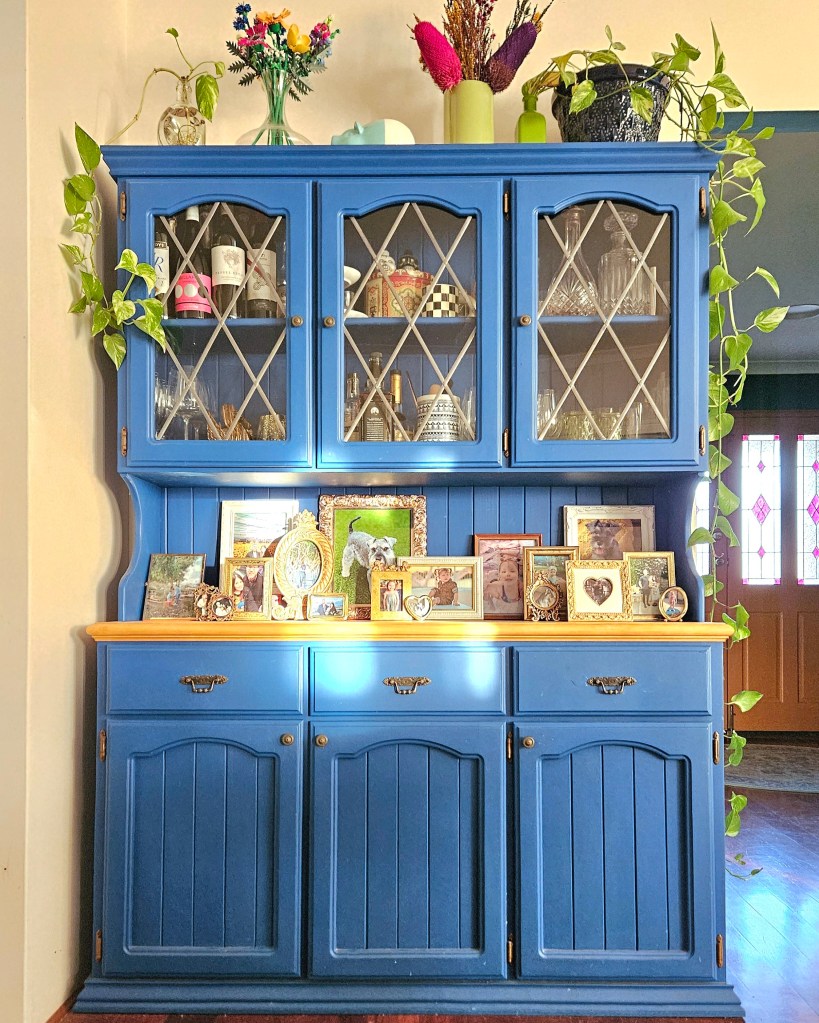
I like to use lots of wood, black and white in my spaces — but I will always include a colour pop.
Especially in a room with white walls and mostly neutral furniture, I like to add a big, random pop of colour somewhere to add an element of surprise and interest.
I’m currently designing our kitchen, which is going to feature black and white cabinetry, white and beige tiles, a terrazzo countertop and black fixtures. So all in all, a very neutral space. That pop of surpise will come from a bold-coloured (possibly red?) freestanding cooktop in the centre of the kitchen. Everything else is neutral, so there’s no need to worry about whether it “goes” with the space.
Nature is colourful, life is colourful. So you’ll never catch me designing a space devoid of colour.
Timber Floors
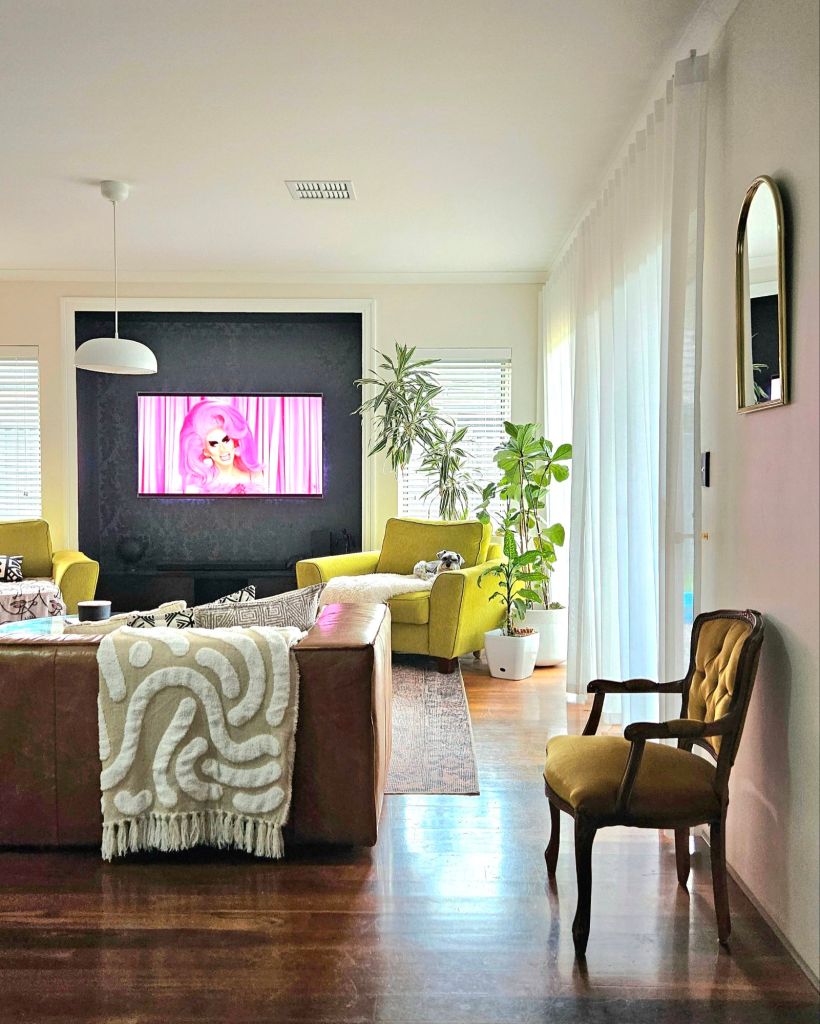
You’ll also never catch me carpeting a room. Or tiling a living area.
I’ve seen nice carpet, but for me personally, I don’t like the permanance of it when you could easily put a big rug on top of hardwood floors for something soft underfoot. Also, most carpet options are pretty boring and they just get so grubby.
Equally, I love a patterned tile moment, but tiles are cold. They belong in wet spaces or outdoors, so tiled living rooms just feel wrong to me.
I believe you should bring elements of nature into every space, and legit timber floors give that box a big old tick.
Hardwood floors instantly make a space feel warm. Using rugs to tick even more boxes (like adding comfort, colour and zoning your space) is a great, non-permanent solution.
Vintage-Style Rugs

Speaking of rugs!
I love rugs. I love all different rug styles too, particuarly those with pattern.
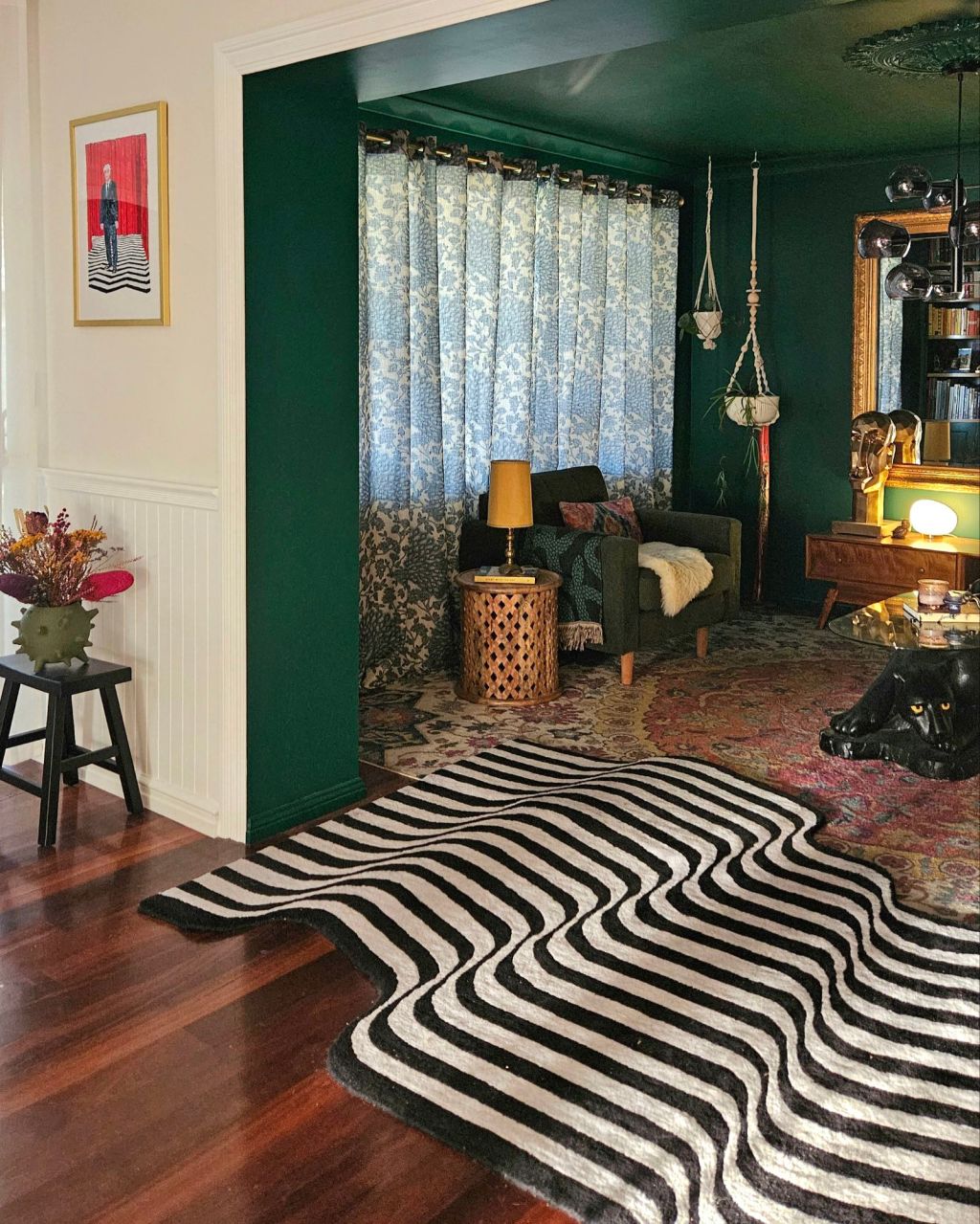
But personally, especially considering my design style is eclectic, I do prefer a more traditional or bohemian patterned rug as an easy way to add a vintage vibe to a space.
These rugs could be in a myriad of colours, but they all add a bit of nostalgia through their pattern, which helps make a space feel more artsy and lived in.
Choosing a more traditional-leaning rug also means I can weave in simpler, more minimalist furniture without making the room feel too modern.
Curated Maximalism

I love maximalism, but I wouldn’t say I’m always a maximalist. Not everywhere, anyway.
Instead, I like to practice maximalism in a defined setting, like on one wall or in one cosy room.
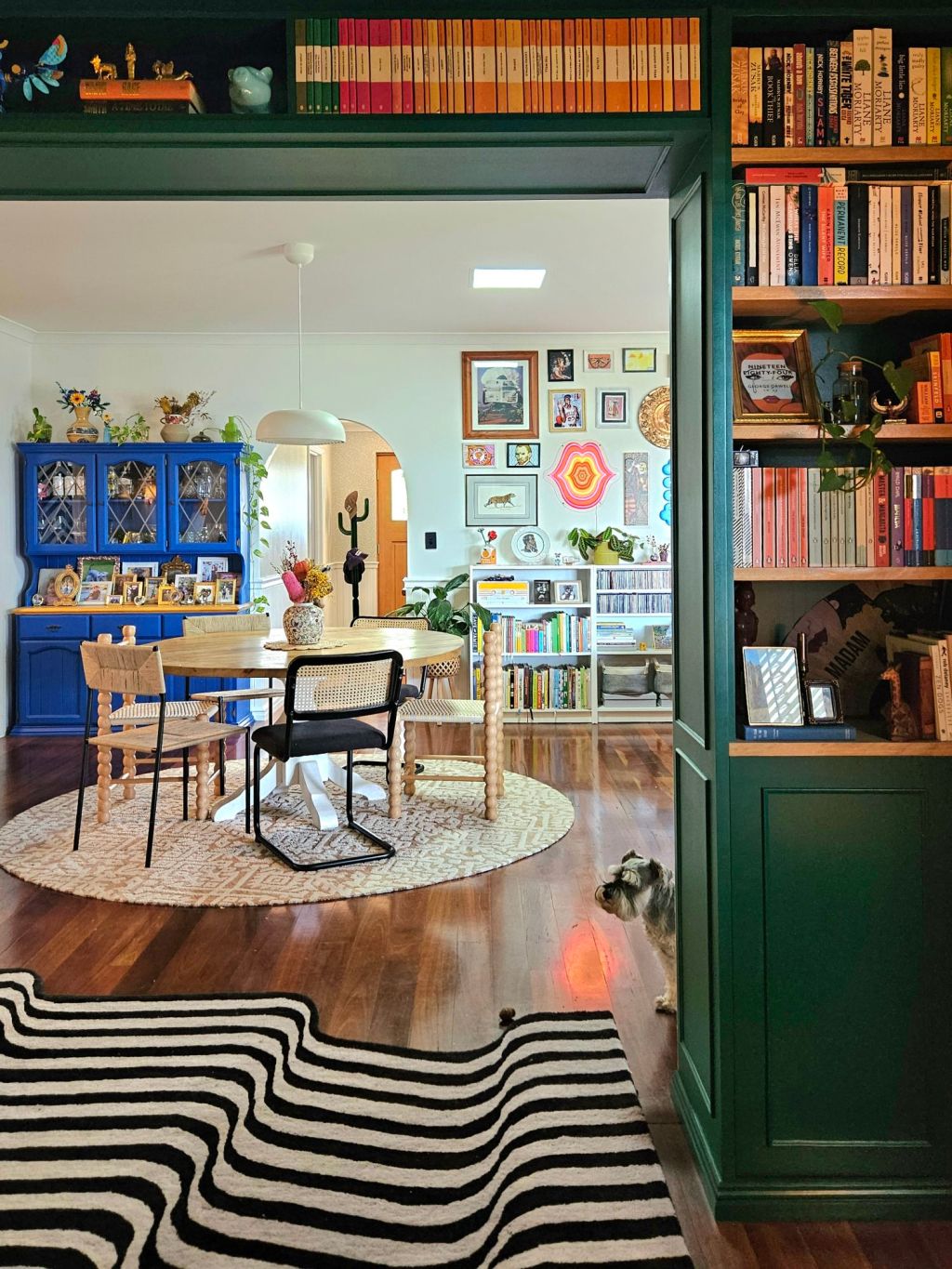
Curated maximalism is a perfect way to describe my living room gallery wall situation.
I love me a gallery wall and ‘bookshelf wealth‘ moment, but I still want it to be organised.
Although it might look that way to a minimalist, our living room wall isn’t just ‘anything goes’.
Everything on the shelf has been selected carefully, and positioned in such a way that it all reads as one big entity, as opposed to a big dump of clutter.
At least according to me 🙂
🎬WATCH: Curated maximalism
Leather Sofas

When choosing a sofa for a living or sitting room, my first instinct is to choose leather.
If you spill your drink on leather, you just wipe it up.
Your pets hair won’t get embedded in leather like it does with fabric.
Leather is durable and hardwearing. Good leather lasts for decades.
But the benefits aren’t all just practical; even when leather ages and gets a kind of patina, that distressed look just adds to its charm.
Leather also helps add another natural element to the home. Real leather is a natural by-product of the meat industry, complete with blemishes and imperfections.
Leather sofas, to me, are timeless. The leather chesterfield in our library is new, but the design has been around since the 18th century. It just doesn’t hit the same upholstered in fabric, though.

Painted Ceilings

When we asked the Bunnings girl for mustard paint for our guest room ceiling a few years ago, she gave us a funny, judgemental look.
But since then, painted ceilings have really been catching on.
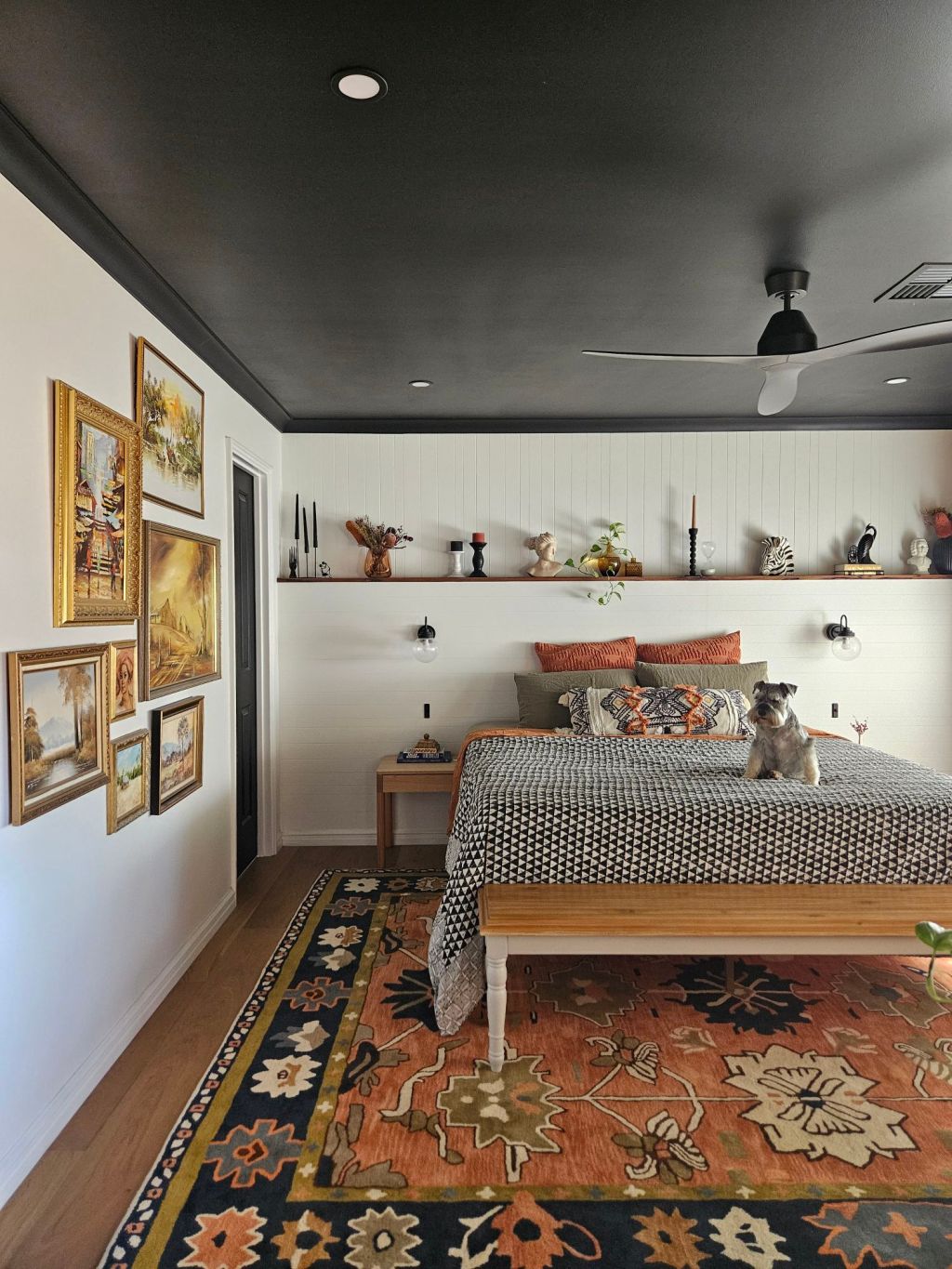
Painting your ceiling in a bold colour, especially when the walls are white, is a great way to blanket the room in colour without going too hard on colour elsewhere.
At some point, someone said ceilings have to be white and everyone just ran with it! The thinking here is that white makes spaces feel bigger and painting a ceiling any other colour would make it feel claustrophobic and bring the ceiling down… which hasn’t been our experience at all.
In fact, colour drenching a room — when the walls, ceiling and trims are all the same colour — actually makes a space feel bigger. That’s because the single colour erases the line where the wall ends and ceiling begins, in turn reducing visual noise and tricking your eyes into thinking the room is bigger.
I wouldn’t necessarily paint the ceiling in an open-plan living area a bold colour (there are a lot more passageways and shapes to consider) but if given the option, I would always consider adding colour to the ‘fifth wall’ in a bedroom, bathroom or other smaller space.
🎬WATCH: This is your sign to paint the fifth wall
White Venetian Blinds

I like to choose window furnishings according to the window size and room, but more often than not I would choose some sort of curtain with white blinds behind them.
White is not only a safe choice for window furnishings, it’s also a smart choice.
That’s because white reflects sunlight and heat. It helps attract more light into your space and bounces it around the room, all while providing better insulation and keeping heat out.
Not to mention, white just works with whatever you’ve got going on colour wise and, as everyone always says, white tends to make spaces feel lighter, brighter and more relaxed.
If you want more colour or privacy, you can still do that with curtains layered over the top.
Mismatched Dining Chairs

Who says all your dining chairs have to be the same?
I really enjoy mismatched dining chairs because it just keeps things interesting. It’s also super helpful if you simply cannot decide on a chair!
Also, dining chairs are expensive! For us, one of the big benefits of buying mismatched dining chairs was that we were able to source them all individually secondhand, ranging from $10 – $50 each — compared to $100 – $300 each brand new.
To create harmony, we gave them all a lick of white paint — but mismatched chairs in different colours and materials can work too! Some of our secondhand chairs are getting a little wobbly, so I’d like to push the mismatched dining chair thing a little further in the near future.
👉 Follow @mismatchedhome on Insta for more from our home.



 mismatchedhome.blog
Leave a comment